
Hyderabad has always been known for its strong culinary identity. When people think about food in the city, dishes like biryani, kebabs, and rich Mughlai curries usually come to mind first. However, the vegetarian dining scene in Hyderabad has gone through a noticeable transformation over the last decade. One of the biggest drivers behind this shift has been the rise of café culture.
I personally started noticing this change while exploring cafés across areas like Jubilee Hills, Banjara Hills, and Gachibowli. Earlier, vegetarian dining mostly meant traditional Udipi restaurants, tiffin centers, or family-style thali eateries. These places focused on classic South Indian dishes such as idli, dosa, vada, and meals served with rice, dal, and sabzi. The food was satisfying and affordable, but the experience remained largely traditional.
Cafés introduced a completely different approach to vegetarian food. Instead of limiting menus to conventional dishes, cafés brought global flavors, creative recipes, relaxed dining spaces, and visually appealing presentations. As a result, vegetarian dining in Hyderabad started evolving from routine meals to a more lifestyle-oriented food experience.
Several factors explain how café culture reshaped veg dining in the city.
1. Cafés Expanded the Definition of Vegetarian Food
Traditional vegetarian restaurants in Hyderabad mostly served South Indian or North Indian cuisine. Cafés expanded that definition by introducing global vegetarian dishes.
Many café menus now include Mediterranean hummus platters, Italian pasta, Mexican burrito bowls, grilled vegetable sandwiches, falafel wraps, sourdough pizza, and fresh salads. These dishes use ingredients such as zucchini, mushrooms, bell peppers, olives, rocket leaves, basil, and artisanal cheeses.
The first time I tried roasted vegetable lasagna at a café in Jubilee Hills, it felt completely different from the typical vegetarian options available in the city. That moment highlighted how cafés introduced diversity to vegetarian cuisine.
By blending international cooking styles with plant-based ingredients, cafés helped vegetarian food feel more exciting and varied.
2. Café Ambience Made Veg Dining a Social Experience
Another important change came from the overall dining environment. Traditional vegetarian restaurants usually focus on quick service and simple seating arrangements. Cafés created a more relaxed and social atmosphere.
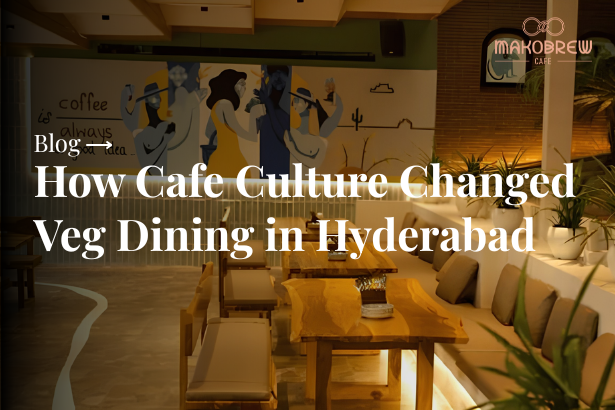
Most cafés in Hyderabad feature thoughtful interior design, warm lighting, wooden furniture, indoor plants, and open seating layouts. These spaces encourage people to spend more time dining, working, or meeting friends.
Food presentation also became more refined. A simple avocado toast, smoothie bowl, or grilled sandwich often arrives plated carefully with colorful ingredients and garnishes.
This shift matters because dining is no longer just about eating. It becomes an experience. Many people visit cafés not only for food but also for conversations, casual meetings, and weekend relaxation.
For vegetarian diners, this environment made eating out feel more modern and engaging.
3. Cafés Introduced Brunch Culture
Before café culture grew in Hyderabad, dining habits mostly followed a fixed structure. Breakfast meant tiffin items such as dosa or idli. Lunch centered around thalis. Dinner usually repeated similar meal formats.
Cafés introduced brunch culture, which changed how people approach daytime dining.
Weekend brunch menus often include pancakes, waffles, smoothie bowls, granola, fresh fruit plates, sourdough toast, and creative vegetarian sandwiches. These meals are lighter, visually appealing, and suitable for relaxed social gatherings.
Many young professionals and students now spend weekend mornings at cafés instead of traditional restaurants. Brunch has become a popular lifestyle activity rather than just another meal.
Vegetarian food fits naturally into brunch menus because many dishes rely heavily on fruits, grains, vegetables, dairy, and plant-based ingredients.
4. Café Menus Encouraged Health-Focused Eating
Health awareness has increased significantly among urban consumers. Cafés played a key role in promoting healthier vegetarian options.
Many cafés now include ingredients such as quinoa, chia seeds, almond milk, oat milk, whole grains, organic vegetables, and fresh fruit. Smoothies, cold-pressed juices, vegan desserts, and nutrient-rich salads are common menu items.
While traditional vegetarian food can also be nutritious, cafés highlight ingredient transparency and balanced meals. Menus often emphasize freshness, natural ingredients, and lighter cooking styles.
During my café visits, I noticed that even non-vegetarians frequently choose vegetarian dishes such as grilled vegetable bowls or smoothie bowls simply because they feel lighter and healthier.
This shift has helped normalize plant-based eating as part of an active and wellness-focused lifestyle.
5. Cafés Encouraged Culinary Creativity
Cafés also gave chefs the freedom to experiment with vegetarian recipes. Unlike conventional restaurants that often follow fixed menus, cafés frequently introduce seasonal dishes and creative combinations.
This flexibility has produced interesting vegetarian innovations in Hyderabad’s café scene. Dishes such as mushroom sliders, jackfruit tacos, beetroot burgers, pesto pasta, roasted vegetable pizzas, and artisan sourdough sandwiches have become increasingly common.
Desserts evolved as well. Many cafés now offer vegetarian cheesecakes, brownies, tiramisu, waffles, and specialty pastries.
These innovations influenced the broader restaurant industry. Many larger restaurants started adding global vegetarian options after seeing their popularity in cafés.
Cafés essentially acted as culinary laboratories where vegetarian food could evolve and adapt to modern tastes.
Conclusion
Café culture has played a major role in transforming vegetarian dining in Hyderabad. Traditional vegetarian restaurants still hold an important place in the city’s food landscape, but cafés expanded the possibilities.
They introduced global flavors, modern presentation, relaxed dining spaces, brunch culture, and health-focused ingredients. Most importantly, cafés changed the perception of vegetarian food from something routine to something creative and lifestyle-driven.
Today, vegetarian diners in Hyderabad enjoy far more variety than before. Someone can start the morning with masala dosa at a classic tiffin center, enjoy a quinoa salad or avocado toast at a café for lunch, and end the day with a traditional thali.
That diversity reflects how café culture reshaped the vegetarian dining experience in the city while still respecting its culinary roots.